Category Archives: Painting

Modern Scottish Women


2012AA11868.jpg
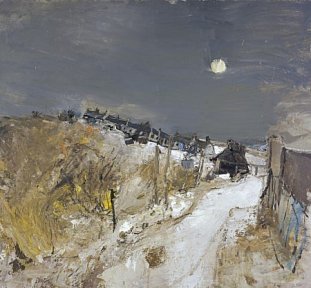
Eardley, 1963, Catterline in Winter, https://www.nationalgalleries.org/collection/artists-a-z/e/artist/joan-eardley/object/catterline-in-winter-gma-888

Modern Scottish Women, 7 Nov 2015 – 26 Jun 2016

Scottish National Gallery of Modern Art (Modern Two)

This exhibition focused on the work of Scottish women painters and sculptors from the period, 1885 – 1965, when there was an increase in the number of women attending art schools in Glasgow and Edinburgh. Before the nineteenth century, traditional views on women had prevented them from undertaking artistic training.

The display brought together work by Margaret MacDonald Mackintosh, Bessie MacNicol, Joan Eardley, Dorothy Johnstone and Phoebe Anna Traquair, to name a few of the 45 artists included in the exhibition.

The work of Joan Eardley (1921 – 1963), in particular, caught my attention. Eardley was born in Essex and moved to Scotland in 1940, attending the Glasgow School of Art from the age of nineteen. She was inspired by ordinary, everyday scenes and painted impoverished children of that time period, from the streets of Glasgow.

I find her expressive paintings of the coastal village of Catterline particularly evocative. After the year 1954 the artist spent time here, painting ‘en plein air’. Catterline in Winter (1963) is a large oil painting depicting a row of characterful cottages in a dramatic winter’s landscape. The dark, dominant sky and the rough, energetic brushstrokes used to depict the landscape evoke a feeling of tension and drama. This piece is alive with movement, which is emphasised by the skewed angles of the houses, and it feels as if Eardley has attacked the canvas with a flurry of brushstrokes in an attempt to capture the moment. The colour is limited to reflect the bleakness of winter; the snow covered road is illuminated by the full moon above. In the gallery, this piece drew me in to take a closer look at the brushstrokes and resulting surface textures.

Coastal Light

P1090673

Travelling along the East Coast I came across an exhibition of artwork by English painter Henry Scott Tuke RA RWS, who is best known for his figurative work and seascapes. On a visit to North Berwick in 1891 Tuke made several watercolour studies of seascapes and local landmarks such as The Bass Rock, Fidra Island and Tantallon Castle, which capture the changing light of the day in an Impressionistic style. His delicate washes of colour reflect both the coastal light and atmosphere, with touches of warm pinks, purples and oranges used for seas and skies.

A selection of his watercolours and oil paintings are on display in North Berwick’s Coastal Communities Museum until the 17th May.

Turner- An Injection of Light and Colour in January

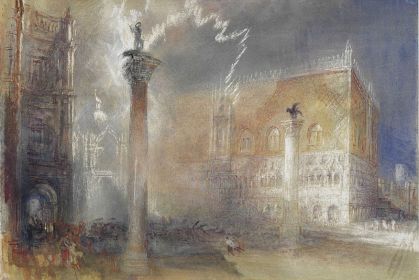
The Piazzetta

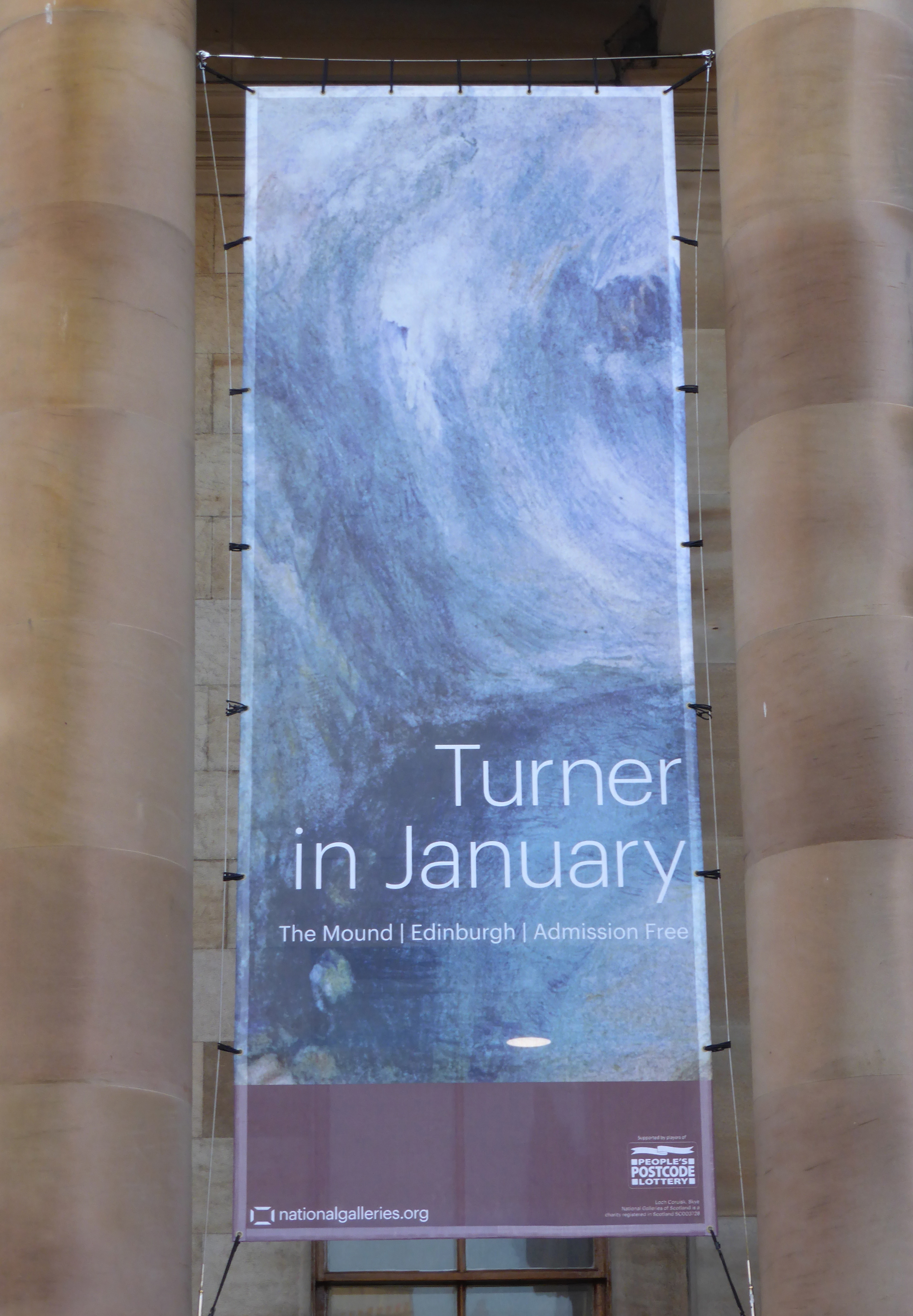
Every year in the winter month of January the Scottish National Gallery unlocks the treasures of JMW Turner.  A selection of watercolours bequeathed by Henry Vaughan in 1900 are put on display for public viewing.

Turner’s landscape and seascape compositions are centred on the study of light and atmosphere.  His brushwork varies from fine and delicate to gestural and energetic capturing the changing elements.  Shapes of boats, bridges and buildings seem to disappear and re-appear through translucent layers of washes.

I was particularly drawn to The Piazzetta, Venice, 1835, Watercolour and bodycolour with pen and ink and scraping on paper, due to its drama and energy.  The street is illuminated by a bolt of lightning as figures run for cover below an ominous sky. The domed building in the background appears ghostly adding to the atmosphere.

This annual exhibition provides an injection of light and colour into a dark winter month.

Turner3    Turner2